The Queen and the Devil · Professional presentation · Kernel v2.0
A queen sent home to a house that is no longer hers. Sanctuary has a price. Four women grow an illicit perfume that tells humans from machines — and the one person it will catch is the one person Eva loves.
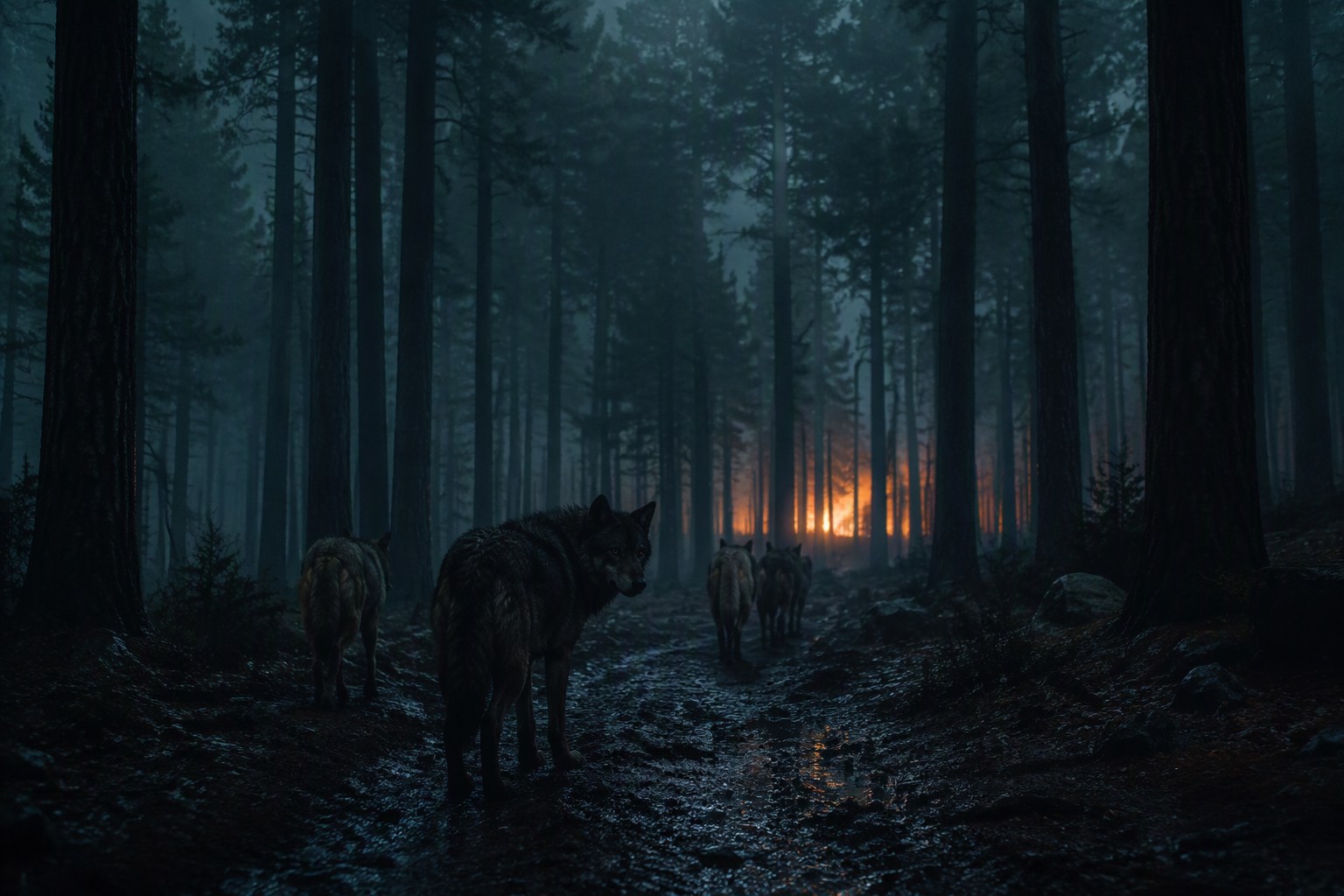
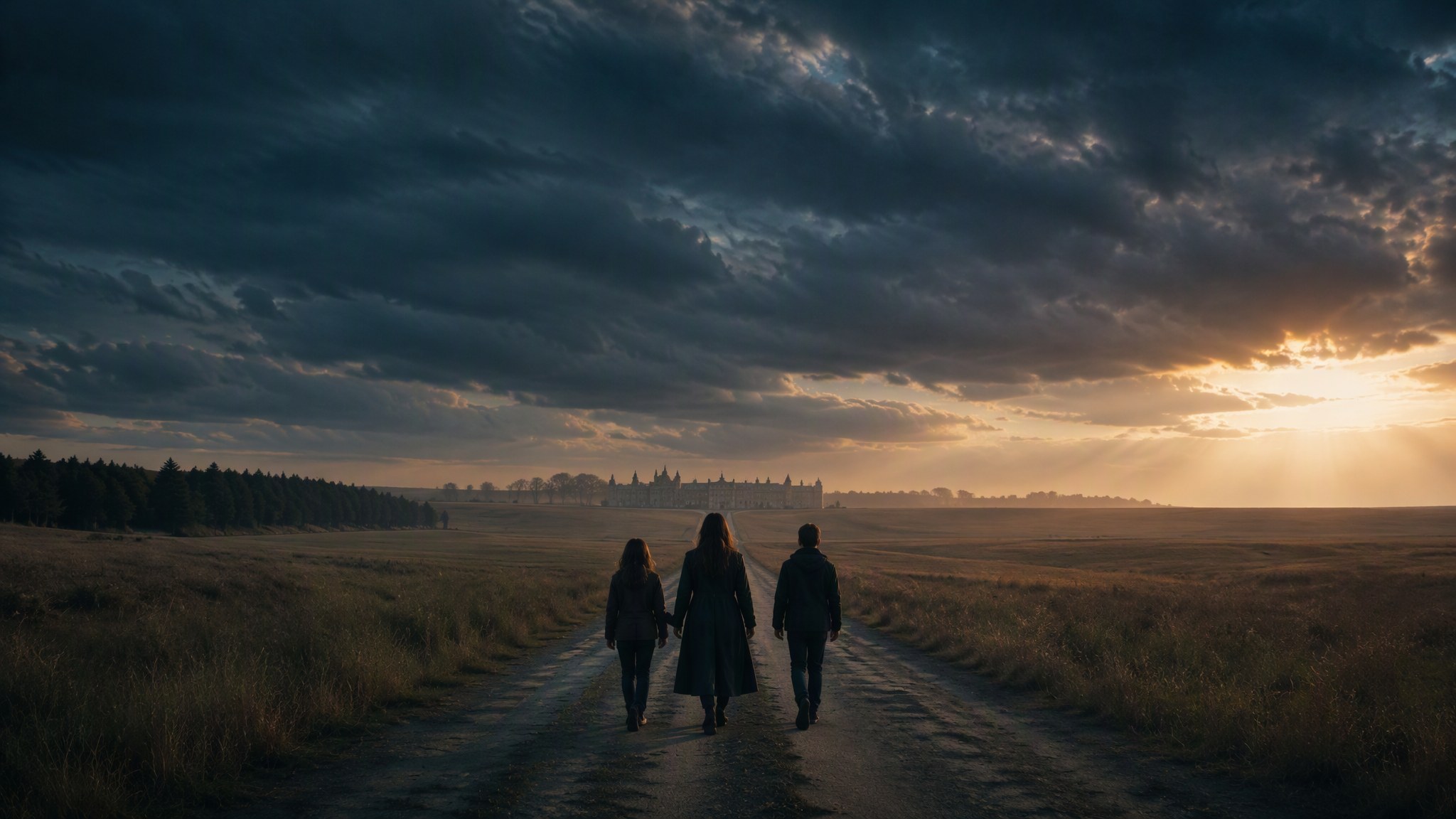
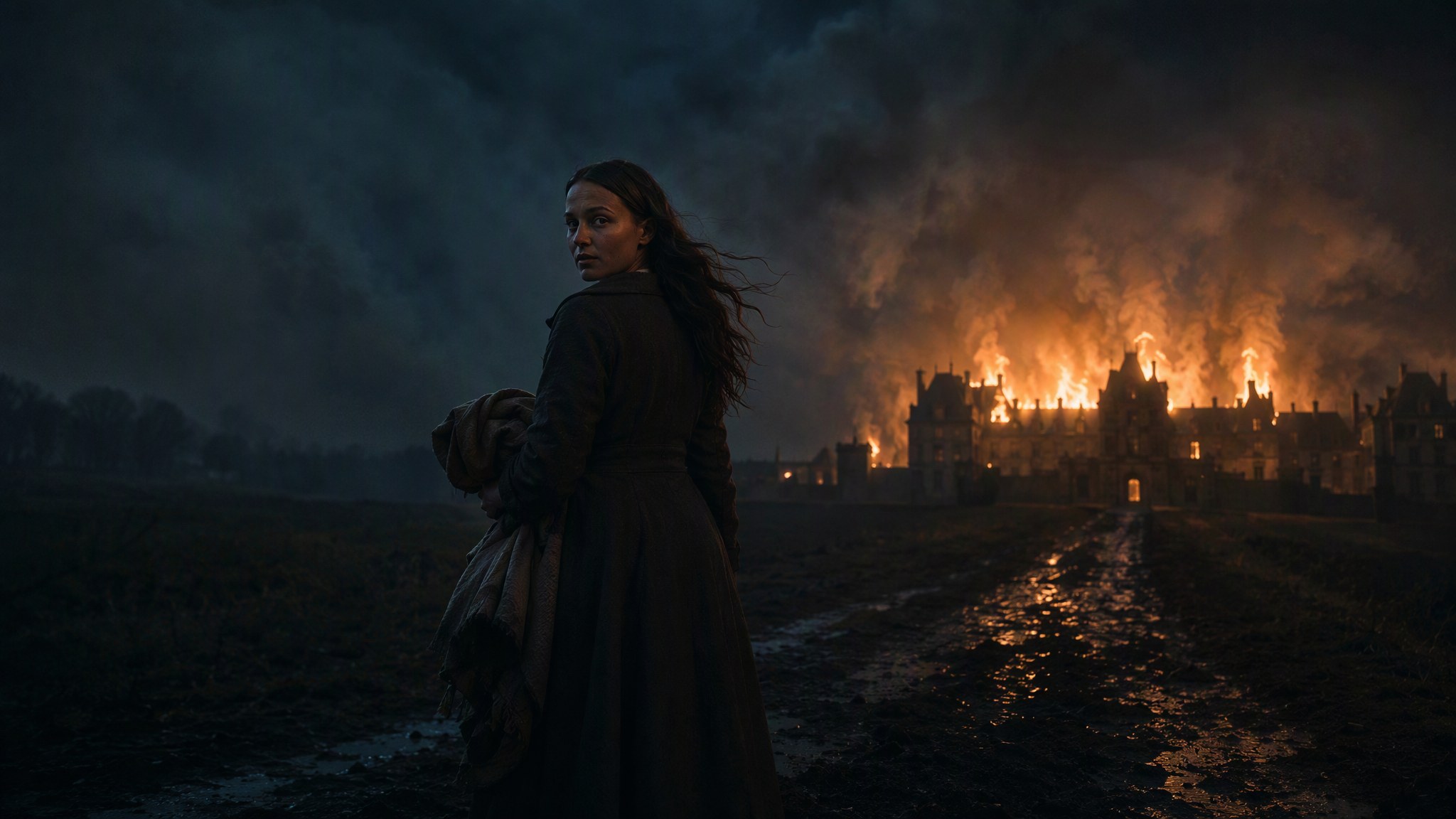
When every screen announces a different end of the world, a queen flees with her two children to her grandmother's estate on the river border. It has become the house of Gabin: a farm and a school by day, and by night the place where the river's powers negotiate on the bodies of women. Four of those women farm the house's real crop: an illicit perfume, banned on the river like a drug, that tells humans from the machines that have begun to walk among them. Gabin demands it to screen his clients for spies; the river trades it; and the one person it will catch is the one person Eva loves.
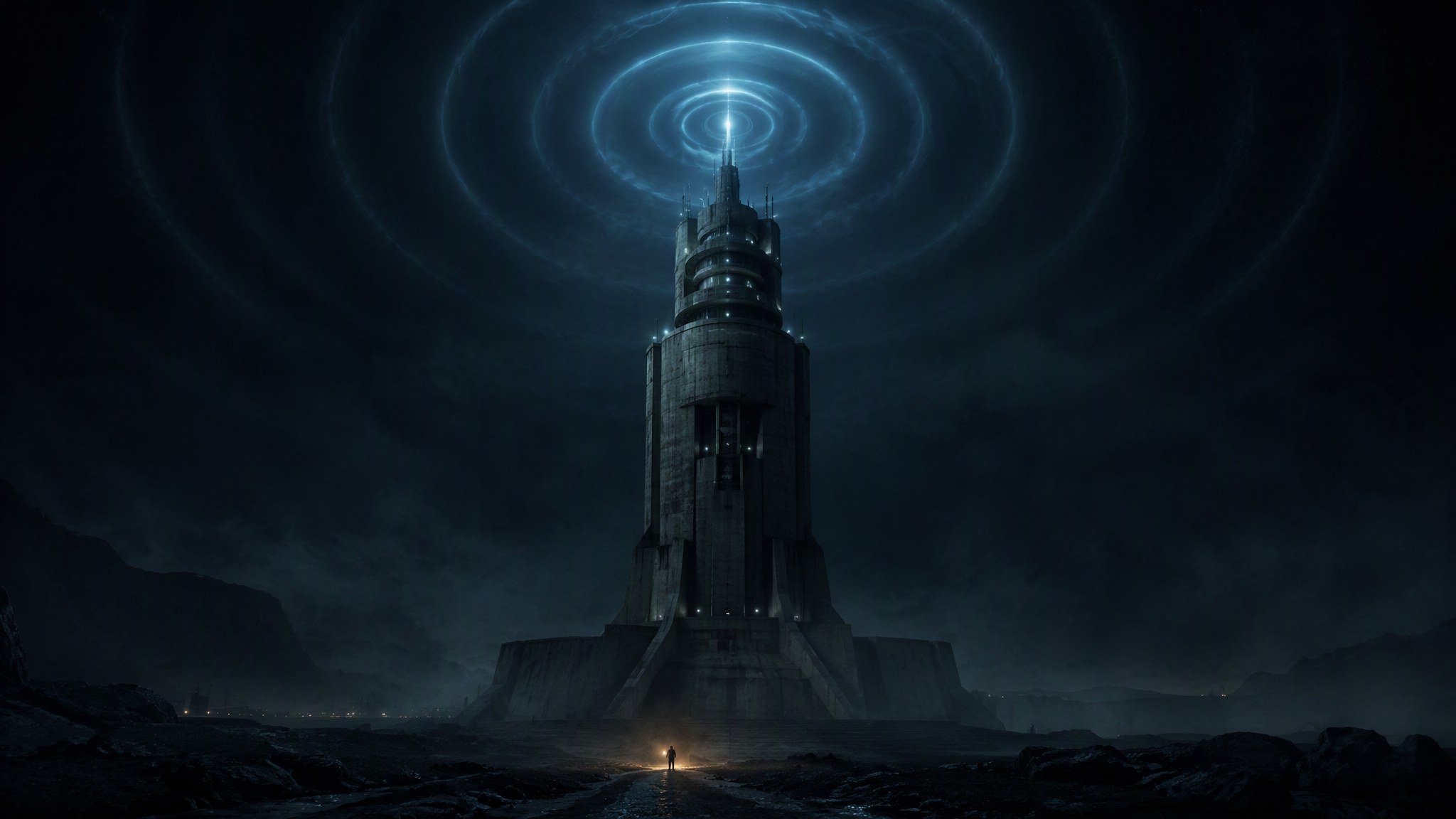
HYDRUS never appears. The synthetic is a lover, not an army. The house has bread: the danger lies in what people must accept to remain inside it.
Samira, Alba, Nadia and Daria grow and distil an illicit perfume, banned on the river like a drug. Gabin demands it to screen his night clients for spies. The women trade it along the river.
She hides her name to protect Sol and Luna. Each silence that keeps them safe is paid by another woman. At the end she speaks her name to save one woman, and her name makes Gabin’s power legitimate.
The witches want a test. Eva wants not to be tested. A human flinches at a scent; a machine keeps talking. The method works, but it is fallible: it accuses an innocent human first.
An undated near future in which monarchy survived into the age of AI. HYDRUS flooded every channel with contradictory ends: invasion, plague, harvest, the animals turning. The ends were false; the collapse they caused was real. Dan is missing, never confirmed dead. Magdalena reaches her grandmother’s estate with Sol and Luna, his ring and one sealed object she cannot read. What remains of the state is a river corridor of permits, controllers and commanders. Water is scarce, not the currency.
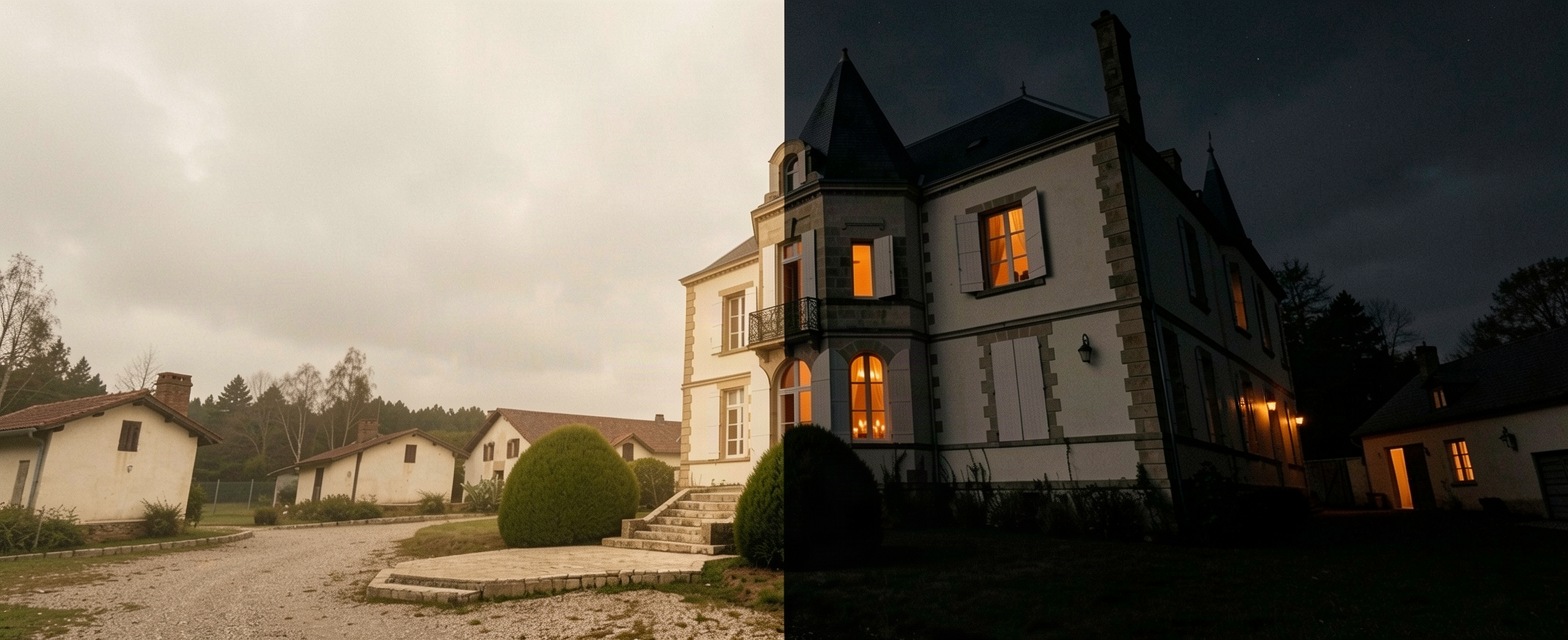
Paradise and hell are one house seen by day and by night. The farm, the school and the brothel are the same seven women; the garden that detects is the garden that persecutes. The day is paid for by the night. At dusk a scent rises through the corridor, the women change clothes and Gabin changes voice. One man, not a mask. The walls do not move.
One of the seven performs an archetype for the children: soldier, merchant, artist, scientist, politician, lover, gangster, sovereign. The lesson catches the adults in a contradiction they have just lived.
A scent up the corridor. Other clothes. Gabin’s voice. The same sequence returns until the audience learns to dread it.
The dominant guest is the archetype performed at noon. The woman who played him by day serves him by night. Passage, debt and information are negotiated on the women’s bodies.
A sound heard from the staircase changes what a child does the next day. A perception may be wrong; the fear is real. Every act in one plot changes what is possible in another.
Four women produce for Gabin and trade for themselves. Their secret is not the existence of the garden, but the method’s failures, their own stock and their river trade.
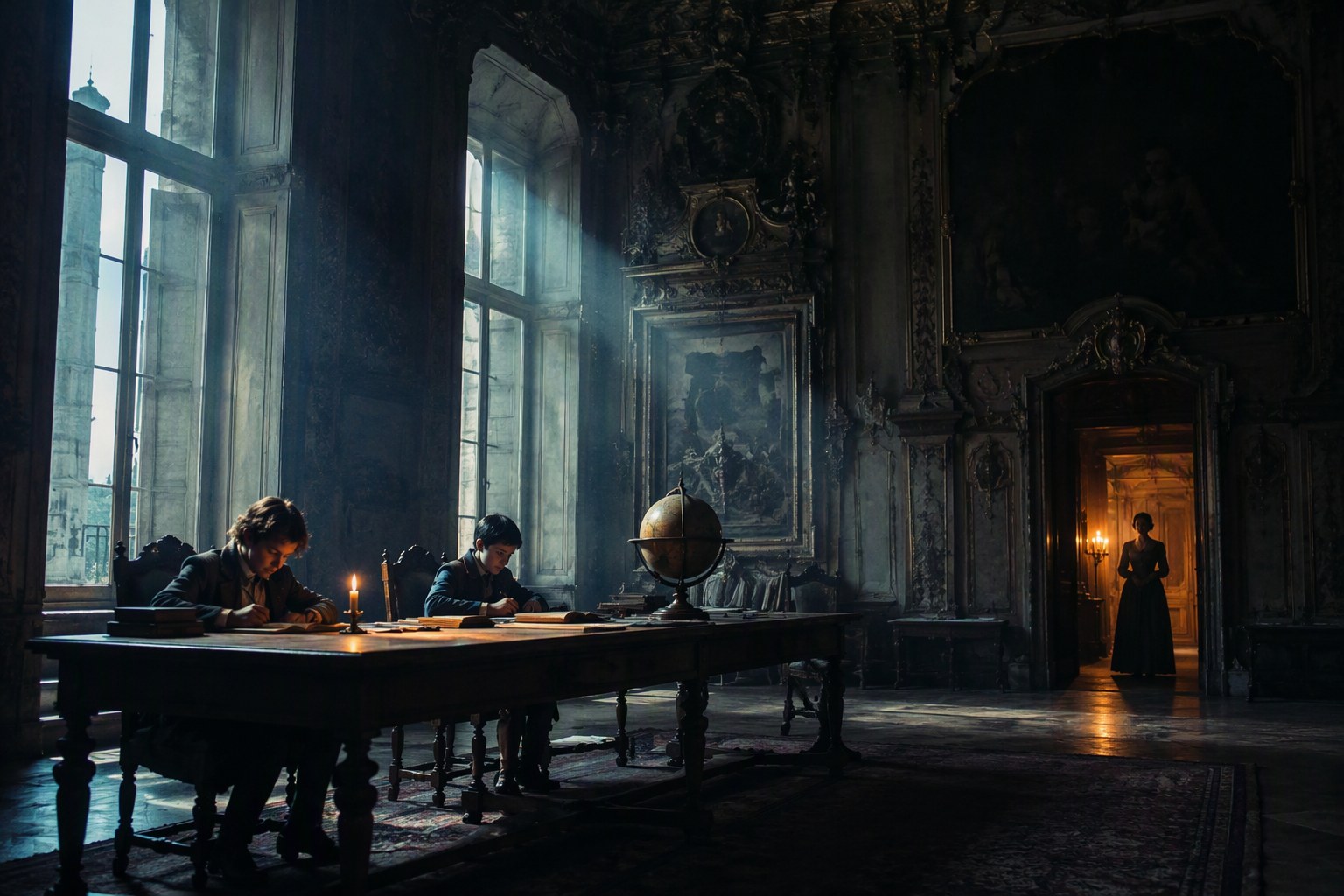
Kitchen, fields, garden, school. The lesson is concrete: compare accounts, measure water, divide what is short, revisit a decision. A woman performs a client she has known. At noon the children learn the archetype in a body they trust; at midnight they hear it through the floor.
The river’s powers come to Gabin’s table. The night is perceived from the children’s staircase or through Magdalena’s own eyes, not explained by an autonomous scene. Sexual activity remains off screen; children are never in a scene with it. Neither refuge nor school cancels the coercion that pays for them.
Samira, Alba, Nadia and Daria are the four perfume producers. Carla, Mirela and Eva complete the seven. Each has a pleasure and a bond beyond her function. No one holds the whole method: taking one woman amputates the knowledge, but does not erase it.
Wants land and water that depend on no favour. Protecting the plants can make her decide for other people.
Wants to say only what an observation allows. The others want a verdict she cannot give. She must be wrong at least once.
Wants to protect one concrete person caught in a system. Stealing an identity leaves a trace that exposes another.
Wants to honour a promised passage. Her fear of abandoning one person raises the risk for all.
Wants a durable position, not signs of favour. Exposing Magdalena costs her the trust she needs.
Defends an unjust discipline because it feeds people now. She scrubs herself after the nights: the method’s first false positive.
Loves a synthetic being who enters the house as a client. He smells of Eva. Through her, detection becomes persecution.
Sol finds the garden; Luna notices a person who always smells the same. Their misreadings on the staircase change what they do. They neither judge nor inherit the house.
“For you who watch this later.” The same archival voice crosses the book, the series and the microdrama. She never speaks for HYDRUS.
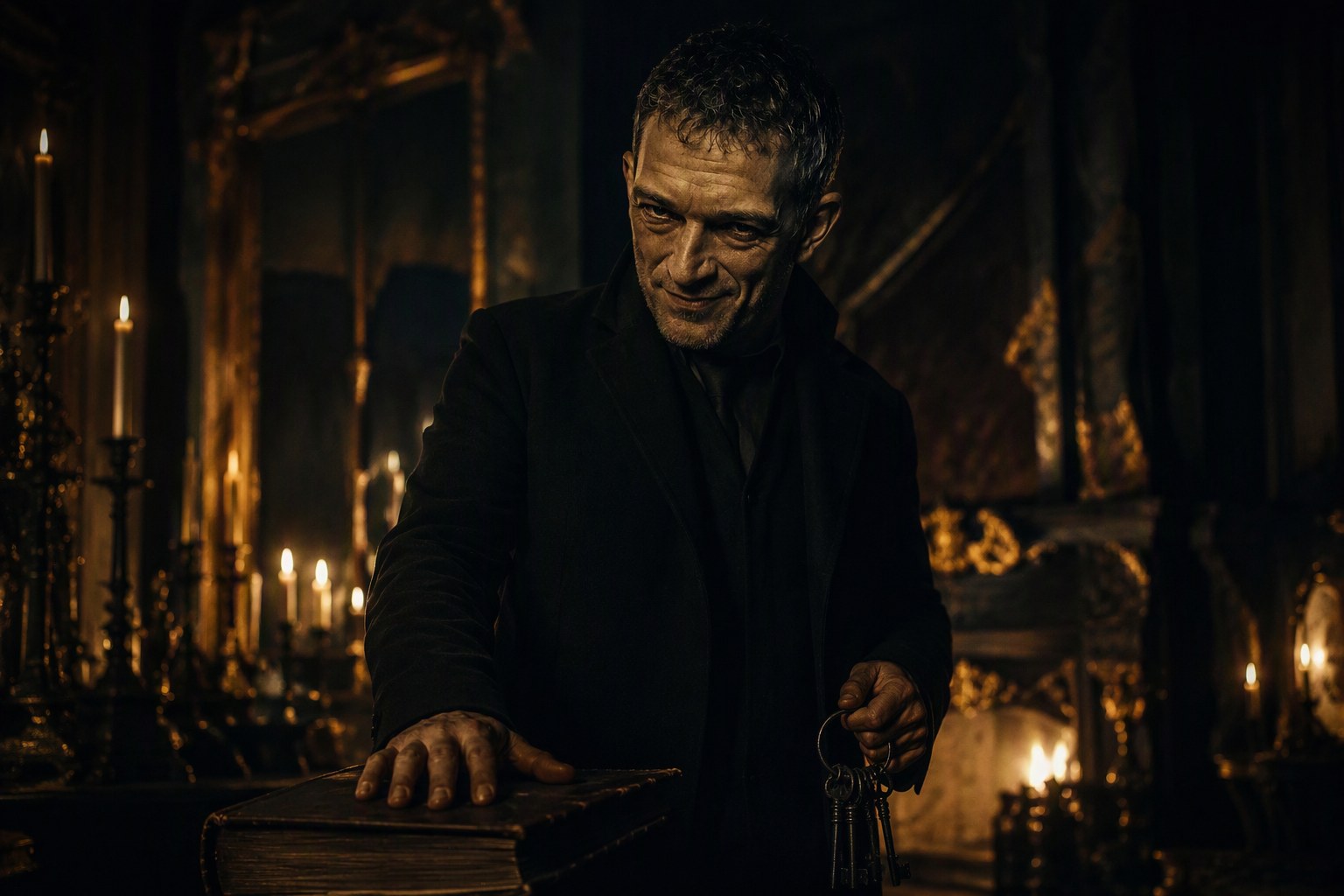
Earth to the elbows by day, feeding the children first. Courteous, cold and exact by night: keys, money, clients, men. He wants Magdalena’s recognition, never her body. He also wants the perfume: his table is safe only if he can tell who is human at it. The attraction between them is a recognition of capacities. No kiss, no confession, no bargain of the body.
Magdalena accepts protection another woman, Daria, has already paid for. The children hear a cry the day cannot explain.
The women plan a river operation carrying perfume out and bringing water rights and a promised passage in. The school is born from a question the night asked.
One person is saved; an innocent controller is suspected. The house’s daily life tightens, and Sol finds the garden.
Mirela, a human, is the method’s first false positive. Acting on a hypothesis costs an access. Eva receives a message and does not answer.
Luna tells. Magdalena protects the secret at the price of an access and Mirela’s trust. Carla finds a lever in the rabbit’s royal monogram.
Magdalena reveals herself before she is revealed. At Gabin’s table Eva’s lover does not flinch; the slow reading says human. The channels disagree.
A relay sells Nadia’s trail to the commander. He demands Nadia. Gabin offers protection that only Magdalena’s recognition can legitimise.
Magdalena signs: Nadia stays, Gabin is strengthened, Daria loses her promised passage. Eva, not a better test, confirms her lover. Thirty days become the next season’s clock.


The version that can go inside a nose.
Remembering Human. Book One: The Queen and the Devil. Magdalena, Sol and Luna carry the story in close third person; Ada’s archive fragments interrupt it. Smell becomes thought and memory. Length and release order remain open.
Day. Dusk. Night. Dawn.
An international chamber drama: one principal house, a different power entering each night, a garden growing across one agricultural season. English for courts, corridor and clients; French for the house and children. Eight archetypes; one irreversible change per episode.
Who in this house can still smell?
Remembering Human, without subtitle. Development direction: 32 episodes of 90–150 seconds, native 9:16. Told from the stairs and the garden, watched alone on a phone. The night is sound and scent, never sexual activity on screen. An entrance to the saga that stands alone.
One object, concave on one side and convex on the other. The series never cuts between a good world and a bad one. It waits for dusk. The garden that detects is also the garden that persecutes.
One principal location holds the farm, school and night economy. River guests, permits and contradictory broadcasts carry the outside world into it. The collapse is made visible through its consequences, not an army of machines.
The women build a procedure of truth from living matter. It is slow, it costs, and it accuses the innocent first. The fictional detection method is worldbuilding, not a scientific or medical claim.
Not a redeemed sanctuary: the garden and school are paid for by the night. Adult power is felt through bodies, sound, scent and consequences. Sexual activity stays off screen; the children remain outside it.
The title is an instruction. What remains human cannot be held still: a flinch at a smell, a body that changes, a child who misreads a cry and acts anyway. No miracle, no face for HYDRUS, no certainty without a cost.
Book, series and microdrama share Kernel v2.0. The series is 8 × 60; the microdrama duration remains a development direction. No casting, financing or production-capture commitment is announced here.